-
Neural progenitors give rise to all sort of cells in our nervous system. These cells are not only found in our brain, but in many organs throughout our body (a.k.a. peripheral nervous system). The developmental trajectories that progenitors generate different types of neurons are still unclear, especially for the peripheral neurons. We are mapping the developmental trajectories of these neurons, and understand they can be modified by genetic or environmental factors, and how they can be potentially reprogrammed to treat diseases.
-
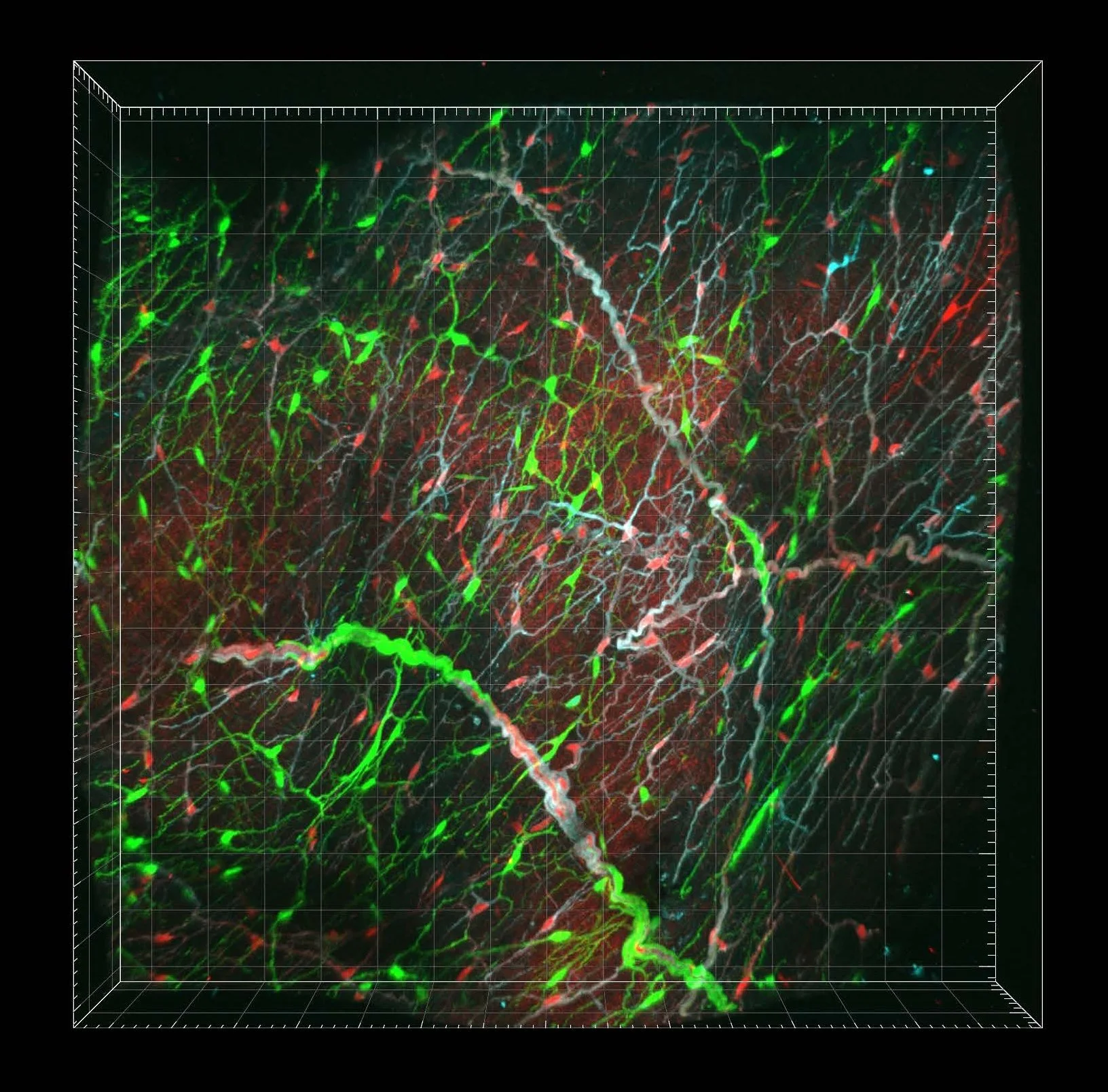
Peripheral neurons connect with each other to form circuits that control organ function. For example, neuronal circuits in the digestive system control gut mobility, permeability, immune and secretion. We are identifying the mechanisms underlying circuit formation during development. We are also studying how the circuits are disrupted in diseases.
-
There are dozens of specialized neuronal subtypes in the digestive system and other organs. It is intriguing that these different neurons work together in a coordinated way to control specialized function. In many cases, specific types of neurons respond to changes in organ physiology. Our lab is studying how specialized neuronal circuits regulate organ function and how they respond to altered signals in the organ microenvironment under diseased conditions.
We are grateful for the following research funding supports